Hospitals have dedicated sterilization teams, but home environments don't. We break down the clinical protocols required to maintain strict aseptic conditions in private home care.
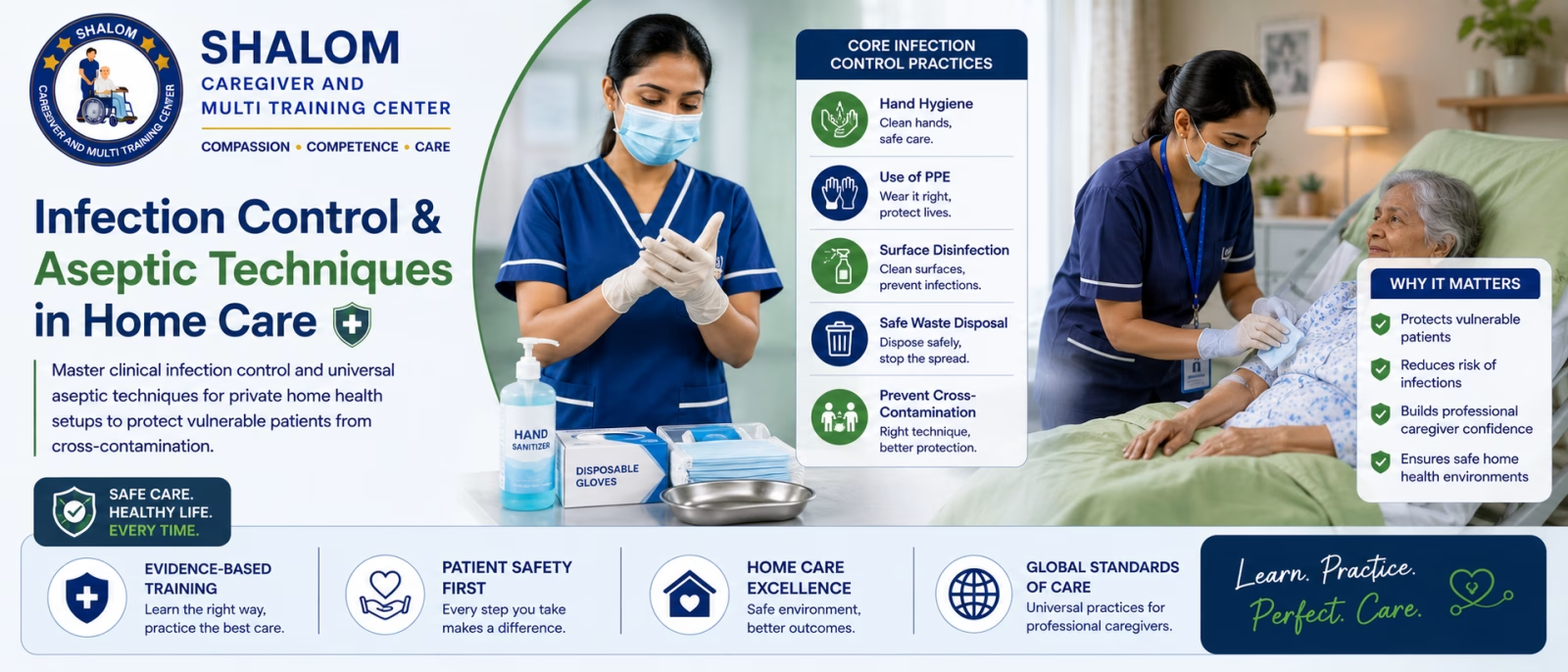
Let's completely ditch the clinical, perfectly controlled fantasy of a hospital ward and look at the actual chaos of private residential home care. When you find yourself managing a fragile, bedridden patient inside an ordinary bedroom, you are completely on your own. There is no automated cleanup crew or commercial-grade sanitation line backing you up. You become the literal barrier between a vulnerable human life and deadly microscopic pathogens. Stepping into this massive responsibility means grounding your daily habits within a verified, high-quality caregiver training in nepal program. Going through an intense, messy, practical-heavy loop of specialized geriatric care certificate programs is the only thing that teaches you to turn a regular chaotic household into a safe, sterile zone where someone can heal without getting hit by deadly complications.
Most beginners honestly think that keeping a room safe just means grabbing a quick antibacterial wipe or dumping a squirt of gel onto their palms. That's dangerous. That kind of basic thinking is exactly how people get hurt when you are managing things like active surgical cuts, fragile feeding tubes, or indwelling urinary catheters. Real clinical asepsis is brutal and entirely unforgiving. It means controlling your physical hands, your instrument trays, and even the tiny air draft variations in the room so that not a single bad microbe migrates into your patient's bloodstream. Lock this muscle memory down, and you stop things like sepsis before they start. Drop the ball for even one second, and you could send a patient into septic shock.
Survival Rules for Keeping a Bedside Field Sterile
It's easy to keep things clean on a stainless-steel hospital tray. Try doing it on an old wooden nightstand or a plastic folding table. You have to train your brain to follow a couple of strict rules without thinking twice:
- Forget the Borders: When you snap open a sterile dressing packet, the outer two inches of that paper drape are instant trash. The ambient room air ruins the margins immediately. Everything you actually need to use, like gauze squares, syringes, or flushing lines, must sit dead center on that paper. Let something slide near the edge, and you throw the whole thing away.
- Shut Your Mouth: You don't talk, cough, or hum while hovering over an open tray. The human throat shoots out invisible moisture bursts that ruin sterile surfaces instantly. If you feel a cough coming on, you learn to pivot your entire torso away from the bed. Also, never stretch an unscrubbed bare arm over your clean tools. Your clothes shed thousands of dead skin cells every minute without you realizing it.
- The Total Drop Policy: There are no five-second rules here. If an instrument brushes your uniform, slips onto a counter, or touches an unwashed surface, it's dead. You don't try to wipe it down with alcohol. You toss it in the bin and rip open a brand-new, sealed pack.
The Correct Way to Scrub Before a Procedure
Ditch the jewelry first. Rings and watches pull in hidden bacteria that soap won't touch anyway. Use your elbows or foot pedals to kick on the water taps. Get your forearms and hands wet right up to the bone. Use plenty of chlorhexidine or heavy iodophor soap until your skin is covered in a thick lather. Now, scrub hard. Do not rush this part. Rub your palms together, slide straight to the backs of your hands, and dig the soap right down into every single finger gap. Use a clean pick tool to rip any trapped dirt out from under your nails. Rub your skin from your wrists all the way down to your mid-forearms with deep pressure.
When you rinse off, keep your fingertips pointing up toward the ceiling. Let the water cascade downward from your fresh fingers and fall directly off your elbows into the drain. Keep those hands up. If your wet fingers dip into the basin, you are contaminated and have to start over. Grab a clean, single-use paper towel. Pat dry starting at the clean fingers and move down toward the elbow skin. Use that exact same damp paper sheet as a shield to crank the metal faucet shut. Your clean bare skin should never make direct contact with the plumbing fixtures.
Ditching the Cross-Contamination Inside the Bedroom
Throwing medical waste into a standard kitchen trash bin is a massive mistake. Body fluids and old dressings rot quickly, turning household rooms into biological hazards. You need a dedicated bedside containment zone set up immediately before opening any clinical tools.
Bloody bandages or soiled suction lines go directly into a thick, leak-proof red bio-hazard bag, kept totally separate from general household junk. Used needles, syringe tips, lancets, and shattered glass medication vials require an immediate drop into a heavy-duty, puncture-proof sharps box. Do not lay an exposed, used needle down on a nightstand for even half a second while you look around for a bin. And never attempt to recap an old needle by hand. A tiny split-second slip means an instant needle-stick injury, opening your own bloodstream to blood-borne diseases. Once that sharps box hits the fill line, lock the lid permanently and dispose of it based on local public health laws.
Why Clean Habits Decide Your Future Overseas
If your ultimate plan is to take your care skills over to competitive international markets like the UK, Canada, or Japan, your daily hygiene movements will be intensely scrutinized. Foreign nursing boards and immigration ministries run zero-tolerance policies on basic sanitation. They expect you to move through aseptic procedures smoothly, without needing a supervisor breathing down your neck.
When you take a practical exam like the UK Objective Structured Clinical Examination (OSCE), the examiners aren't just listening to what you say. They are watching your hands. They track if you clean your skin at the exact required moments, check if you discard gloves properly, and evaluate your awareness around the bed space. Showing total, effortless control over these infection routines proves to evaluators that you can step onto a live ward safely on day one, allowing you to pass your assessments easily.
Building Real Muscle Memory in Kathmandu Valley
You cannot develop flawless aseptic reflexes by looking at color pictures in a textbook. You have to physically practice these exact movements over and over using authentic medical equipment, real drapes, and actual sharps containers.
That absolute refusal to cut corners is why choosing a high-quality caregiver training center in kathmandu is the smartest career step you can take. Located at Adwait Marg, Purano Bus Park Road, Kathmandu, our modern campus features high-fidelity simulation environments built to mirror actual hospital rooms. Our trainees develop their skills under the direct guidance of registered nursing faculty who stop and correct your hand positions before you develop bad habits.
Don't worry about manual verification tracking slowing down your immigration paperwork either. Foreign embassy staff, international health boards, or overseas hospital recruiters can easily scan your certificate with a smartphone camera. This action pulls up your live, authenticated transcripts and laboratory clock-hours on the spot. By locking down these clean protocols inside a high-standard facility, you make your entry into the local or global care workforce incredibly fast, transparent, and legally secure. By learning where the mistakes happen early, you keep your global healthcare career path safe, fast, and completely secure.
Next Steps for Your Professional Career:
- To compare our specialized training programs and review shift structures, visit our comprehensive Main Courses Hub.
- Explore the precise international compliance frameworks integrated into our premier About Us Transparency Portal.
More
Related posts
Training
Oxygen Therapy Management: Non-Invasive Vent Supportive Routines and Flow Rate Controls for Home Caregivers
Read more →
Educational