The global healthcare market is experiencing an unprecedented structural shift. As populations age rapidly across industrialized nations like Japan, Germany, the United Kingdom, Canada, and Israel, the demand for qualified healthcare assistants has skyrocketed. For thousands of individuals in Nepal, this demographic transition presents an unparalleled career opportunity. However, moving from an aspiring student in Kathmandu to a legally employed healthcare professional abroad requires a standardized, legally recognized vocational foundation.
When navigating foreign employment frameworks or high-end local healthcare placements, your institutional certification is your primary passport. In Nepal, the gold standard for vocational legitimacy is the Council for Technical Education and Vocational Training (CTEVT). Enrolling in a certified ctevt affiliated caregiver training center is the absolute baseline requirement to ensure your training hours, practical lab skills, and legal documentation survive rigorous international immigration audits.
What is a CTEVT Affiliated Caregiver Training Center?
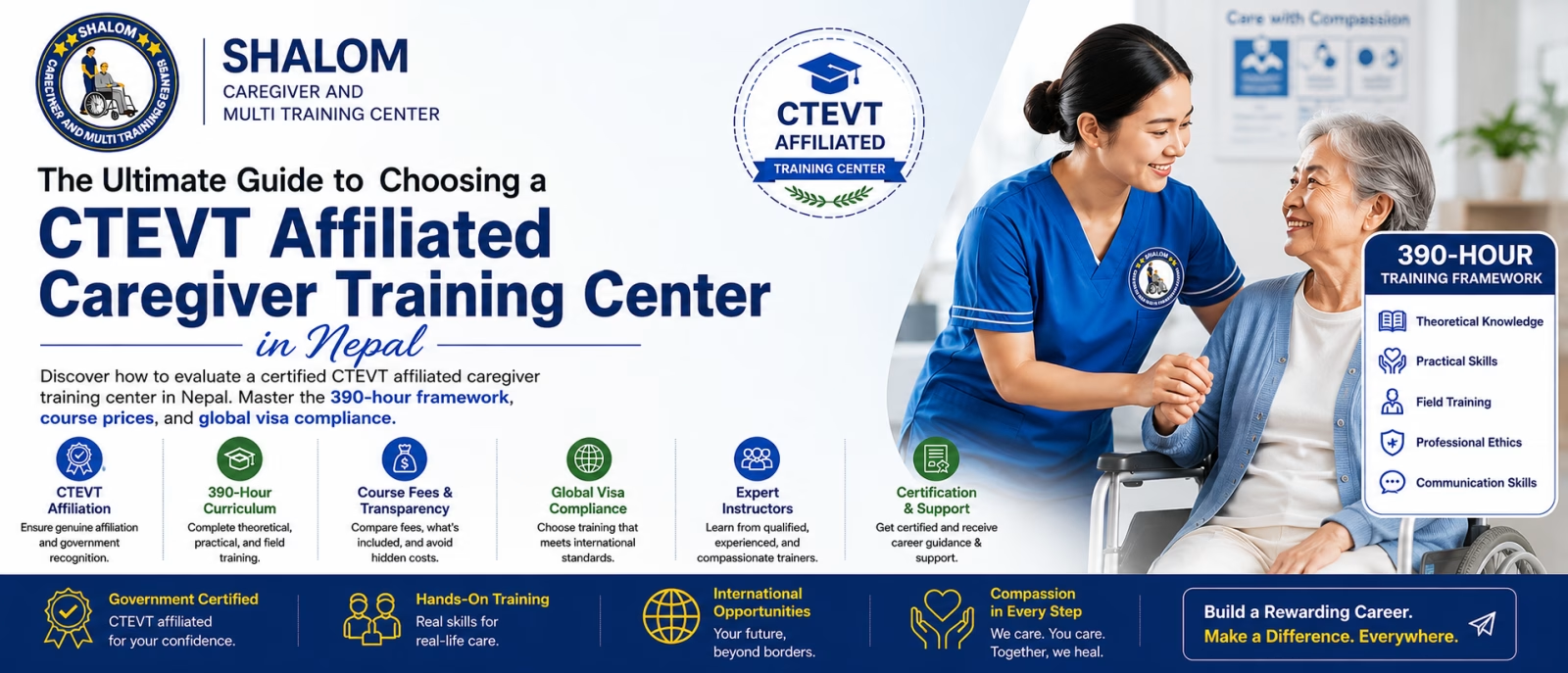
The Council for Technical Education and Vocational Training (CTEVT) is the apex state body responsible for engineering, regulating, and standardizing technical education across Nepal. A training provider operating with formal CTEVT affiliation does not simply design an arbitrary course; instead, the center must strictly adopt national competency frameworks, layout precise instructor-to-student ratios, and subject its physical facilities to stringent government inspections.
When you enroll in a certified caregiver training center, the curriculum you follow is legally structured around core human health sciences. This eliminates the risk of subpar training academies offering quick certificates that carry zero verification data weight. A verified center ensures that your educational journey aligns with the National Vocational Qualifications System (NVQS), transforming you from a general assistant into an authenticated healthcare worker.
Structural Breakdown: The Standardized 390-Hour Framework
A true caregiving program validated by CTEVT follows a mandatory 390-hour blueprint distributed over a structured 3-month timeline. This curriculum is engineered to build technical, mental, and physical muscle memory across five core domains:
| Subject Area | Focus Competencies Taught | Practical Application |
|---|---|---|
| 1. Environment & Sanitation | Infection prevention, waste segregation, clinical sterilization, and safe in-home environments. | Hand hygiene drills, donning/doffing PPE, and managing hazardous medical waste. |
| 2. Nutrition & Diet | Understanding macronutrients, computing caloric requirements, and managing therapeutic diets. | Preparing specialized meals for diabetic, hypertensive, or dysphagic patients. |
| 3. Emergency Response | Recognizing physiological warning signs, triaging incidents, and executing basic life support. | Full CPR simulations, choking relief maneuvers, and wound dressing. |
| 4. Hygienic Care & Mobility | Maintenance of personal hygiene for bedridden individuals and ergonomic patient transfer mechanics. | Bed bath execution, diaper management, bedsore prevention turning, and wheelchair transfers. |
| 5. Maternal & Child Care | Pre-natal and post-natal home support, newborn health tracking, and infant nutritional scaling. | Infant growth charting, safe bathing practices, and postpartum maternal tracking. |
Every single module within this framework alternates between formal technical lectures and intense, interactive simulation drills. According to state guidelines, students must complete at least one hour of theory paired with a minimum of two hours of direct practical laboratory execution per session, ensuring that textbook concepts turn into immediate manual skills.
Why Official Affiliation Matters for International Visas
For individuals exploring global labor migration pathways, the credential evaluation stage is where unaccredited institutes cause automatic visa rejections. Foreign ministries do not verify independent academies; they verify state-level regulatory backings.
The Japan Specified Skilled Worker (SSW/Kaigo) Pathway
To secure the highly sought-after Kaigo (Caregiver) visa for Japan, candidates must clear both the Japanese Language Evaluation (JFT-Basic or JLPT N4) and the specialized Nursing Care Skills Evaluation Test. Enrolling in a recognized center for caregiver training in nepal kathmandu ensures that your mock lab exams mirror the exact grading rubrics used by Japanese proctors, drastically elevating your page-one passing rates.
The United Kingdom and European Health Frameworks
The UK Health and Care Worker Visa demands absolute verification of clinical training hours. When an international recruitment agency or a National Health Service (NHS) trust reviews a Nepalese applicant, a standard certificate from an independent academy prompts intensive background check delays. Conversely, a certified diploma originating from a government-recognized program signals instant compliance with baseline vocational metrics.
Critical Compliance Note: When state-level frameworks are further paired with global compliance recognitions—such as an ISO 9001:2015 registration, CPD UK standardizations, or SDC Canada credits—your academic transcripts bypass slow manual paperwork pipelines entirely.
Physical Markers of the Best Caregiver Training Center in Kathmandu
With numerous training providers appearing across the Kathmandu Valley, discerning students must look beyond marketing catchphrases to assess true instructional infrastructure. The best caregiver training center in kathmandu can be identified by three non-negotiable physical markers:
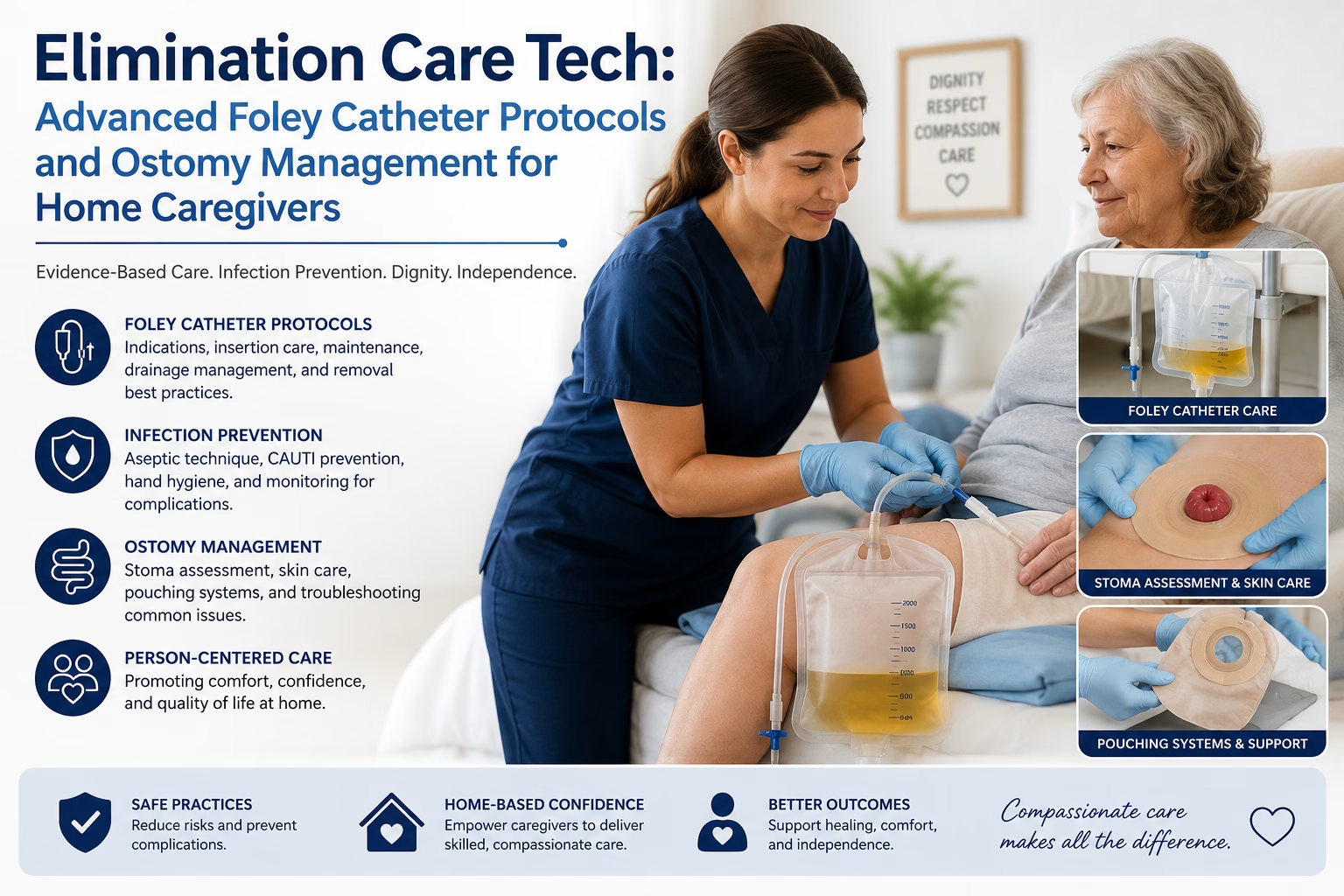
- High-Fidelity Medical Simulation Labs: The practical space must mirror an authentic hospital ward or an advanced home ICU station. Look for physical clinical assets, including adjustable hospital beds with safety side-rails, anatomical models for catheter care demonstrations, medical-grade diagnostic equipment (sphygmomanometers, glucometers, pulse oximeters), and real mobility support rigs like patient hoists, standard walkers, and ergonomic wheelchairs.
- Registered Medical Faculty: Your mentors must be active, licensed professionals—not just past graduates who have taken a short training course. The best training centers hire registered nurses (BN/BSc Nursing) and medical educators with extensive, documented clinical experience in major institutional hospitals.
- Strict Pattern of Attendance and Grading: Under formal CTEVT rules, trainees must maintain a minimum of 90% attendance across the 390-hour training period to qualify for the final certification exams. If a center promises you a certificate despite frequent absences, they are putting your entire international career track at risk.
Navigating the Financial Investment: Fees vs. Career ROI
Understanding the realistic caregiver training price in nepal is essential for proper career budgeting. Across legitimate, accredited institutes within Kathmandu, the complete 3-month investment for a comprehensive 390-hour track typically spans from NPR 40,000 to NPR 50,000.
While this may seem higher than informal, unaccredited short courses, evaluating the immediate return on investment (ROI) changes the perspective. Certified graduates entering private home healthcare networks or elderly care institutions within Kathmandu Valley can expect starting monthly salaries ranging from NPR 25,000 to NPR 45,000. For those who leverage their standardized training to cross international borders, professional caregivers working under formal contracts in Japan, Israel, or the UK earn monthly wages ranging from NPR 150,000 to over NPR 280,000.
Launching Your Path with Shalom Caregivers
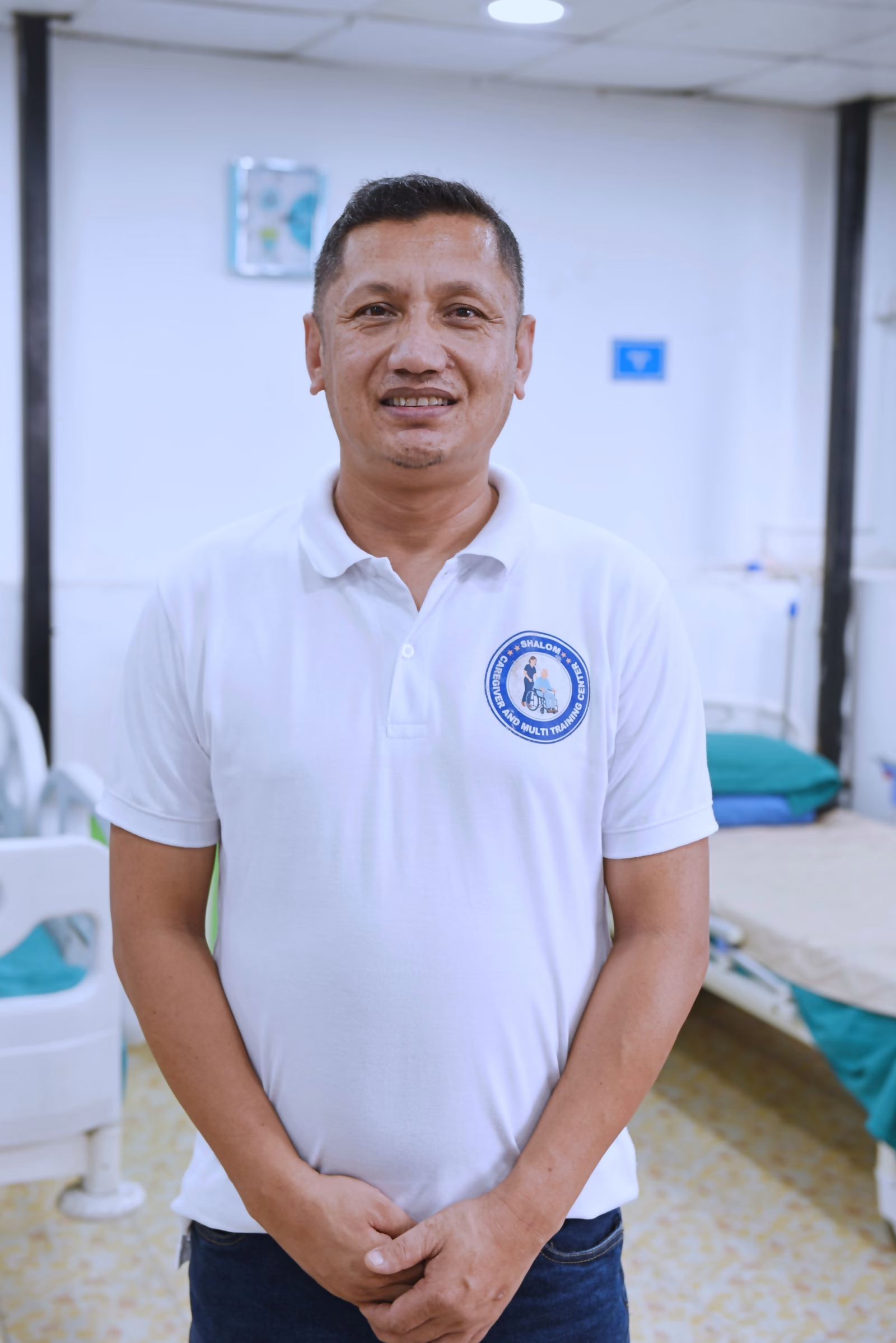
If you are currently searching for an authentic, premium caregiver training center near me within Kathmandu, Shalom Caregivers And Multi Training Center provides the ultimate balance of institutional legitimacy and global career mapping. Conveniently located at Adwait Marg, Purano Bus Park Road, Kathmandu, our facility bridges the exact gap between rigorous national vocational standards and modern global healthcare expectations.
Backed by an official ISO 9001:2015 certification, international CPD UK/SDC Canada credits, and a state-of-the-art medical simulation lab, our registered nursing mentors guide you step-by-step through every practical competency required to excel. To provide our graduates with absolute professional security, every single certificate we issue features an advanced, tamper-proof QR code for instant worldwide digital verification. This allows foreign embassies, healthcare employers, and immigration boards to verify your transcripts and practical hours instantly from any smartphone, ensuring your path to global employment is completely smooth and secure.
Next Steps for Aspiring Healthcare Professionals:
- To compare our specialized training programs and review shift structures, visit our comprehensive Main Courses Hub.
- For a detailed breakdown of our government-aligned curriculum, explore the specialized CTEVT 390 Hours Caregiver Course landing page.