How do foreign employers confirm local graduation records? We unpack the technical, step-by-step administrative tracking pipelines used by international health registries to audit caregiving diplomas from Nepal.
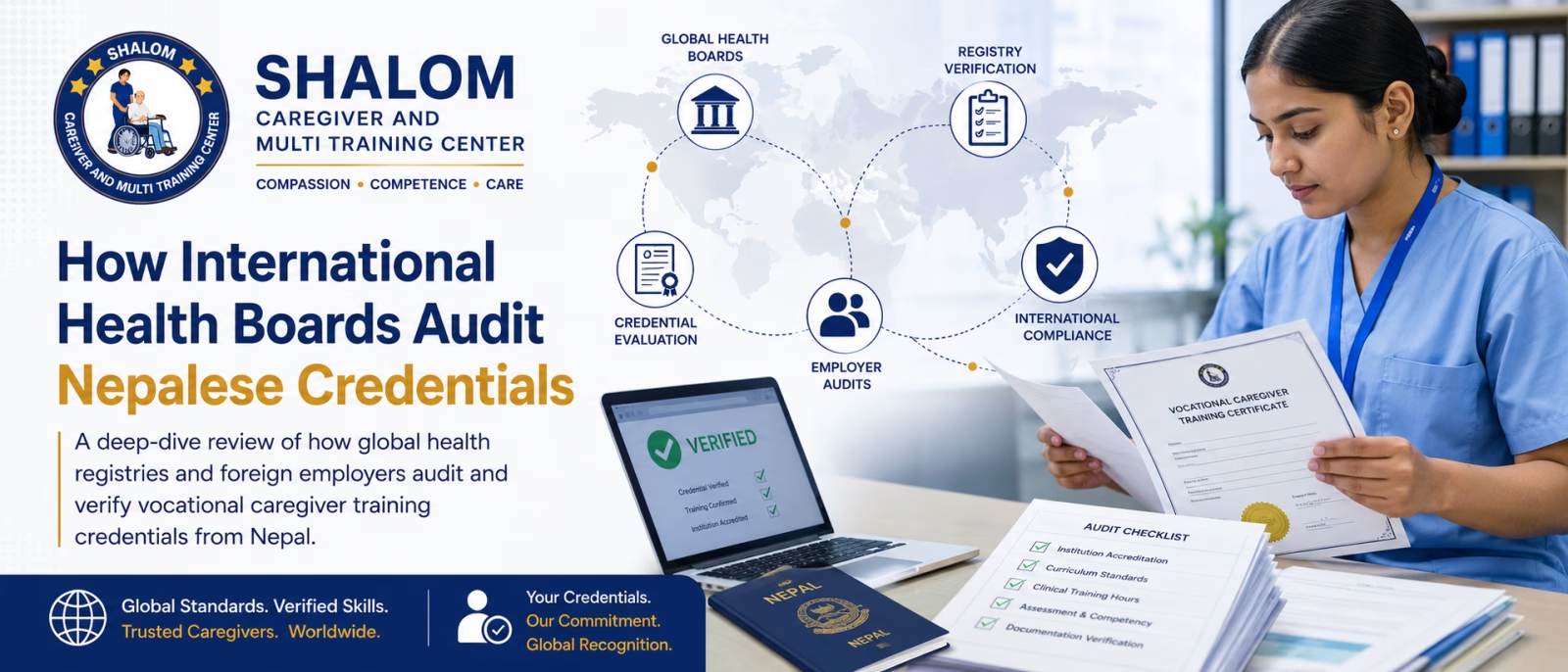
The global demand for skilled healthcare assistants has opened incredible employment corridors for technical graduates from Nepal. However, because caregivers are directly responsible for vulnerable lives, international healthcare employers, nursing councils, and immigration ministries operate under zero-tolerance policies regarding academic and professional documentation. Passing a technical interview is only the first step; your certificates must survive a thorough, multi-layered background audit before an official work visa or clinical license can be issued.
A global background check is not a superficial glance at a piece of parchment. It is a highly systemic, legally binding process handled by specialized international screening agencies and state registries. For candidates aiming for placements in the UK, Japan, Canada, Israel, or Europe, understanding how these verification pipelines operate is crucial. This deep dive explains the step-by-step administrative tracking channels used by foreign boards to verify local graduation records, reinforcing why choosing a verified caregiver training center is absolute baseline protection for your professional future.
Phase 1: Primary Source Verification (PSV) and Global Registries
When an application enters an international recruitment pipeline, the tracking agency initiates a protocol known as Primary Source Verification (PSV). Rather than examining the physical copy of the diploma provided by the applicant—which could potentially be modified—the auditing firm goes directly to the absolute root: the specific training facility or state council that issued the credential.
Global screening firms cooperate with regional verification hubs to cross-reference candidate names, enrollment tracking codes, and exact completion dates against official institutional databases. If an academy operates without formal registration or stores its graduation records in unindexed, analog paper files, the verification pipeline stalls. Elite verification networks automatically crosscheck local institutional credentials against state registries like the Council for Technical Education and Vocational Training (CTEVT) to ensure the training provider holds legitimate, active operational charters.
Phase 2: Verifying Clinical Hour Distributions and Syllabus Layouts
International health ministries demand clear, unambiguous proof that an applicant’s vocational education matches the clinical hours required by their domestic healthcare workers. Foreign boards execute a detailed structural evaluation of the course transcripts, looking past superficial course titles to audit the actual distribution of instructional contact hours.
The auditing pipeline separates an education into two distinct categories: theoretical lecture blocks and proctored, hands-on laboratory simulation hours. For instance, Western healthcare frameworks and Asian technical immigration programs check for a minimum threshold of structured training hours, such as the national 390-hour vocational standard. The audit verifies whether the student completed direct, supervised practice in mandatory modules like infection control, ergonomic patient mobility transfers, basic life support (CPR), and specialized nutrition. If the transcript shows an imbalance—such as excessive classroom lectures paired with insufficient practical lab experience—the file is flagged for structural non-compliance.
Phase 3: Legal Affiliation and Government Registry Audits
The final layer of a global background check involves checking the formal regulatory stand of both the applicant and the training hub. International screening bodies utilize updated global compliance databases to verify that the domestic training provider operates with active, uncompromised government recognition.
During this evaluation phase, specialized agencies verify the center's company registration, tax compliance certificates, and its formal authorization from the Department of Foreign Employment (DoFE). This is particularly critical for tightly monitored bilateral government-to-government (G2G) recruitment tracks, such as the official migration corridors between Nepal and Israel. If the background check reveals that a training center lacks proper state authorization, the applicant’s visa file can be permanently closed, highlighting why working with a verified provider is non-negotiable.
The Impact of International Accreditations on Processing Speeds
The duration of a global background check can vary significantly based on how an institution structures its compliance portfolio. Standard, local-only credentials often require manual paperwork verification, a slow process that involves physical letters, phone confirmations, and manual document handovers that can delay visa processing for months.
Conversely, when a vocational program integrates global credit frameworks—such as Continuing Professional Development (CPD) UK points or Skill Development Council (SDC) Canada standardizations—the verification process accelerates. These international alignments act as a pre-vetted stamp of quality, signaling to foreign systems that the curriculum and laboratory testing metrics already match recognized Western vocational standards. This transparency allows screening agencies to clear applications quickly, keeping your migration timeline on schedule.
Securing Your Legal Pathway at Shalom Caregivers
For vocational aspirants looking to build an international healthcare career, selecting an academy that values legal safety and structural compliance is essential. Protecting your educational investment requires choosing a center whose credentials can successfully pass through rigorous global auditing pipelines without delay.
This absolute security is exactly what makes navigating to the best caregiver training center in nepal the smartest choice for your career. Located at Adwait Marg, Purano Bus Park Road, Kathmandu, our modern center is engineered to meet both strict national regulations and advanced global verification expectations. Featuring high-fidelity medical simulation labs and a dedicated faculty of registered nursing mentors, we ensure our trainees possess verified, high-tier clinical competence.
To eliminate processing delays during international credential checks, we feature an advanced digital verification setup. Every single diploma we issue contains a secure, personal QR code for instant worldwide digital verification. This allows foreign embassies, international health boards, and overseas employers to scan your certificate from any smartphone and view your live, authenticated academic transcripts and lab hours instantly, ensuring your path to global employment remains completely secure and uninterrupted.
Next Steps for Your Professional Career:
- To compare our specialized training programs and review flexible learning shifts, navigate to our Main Courses Hub.
- For an in-depth breakdown of our government-aligned practical modules, explore the specialized CTEVT 390 Hours Caregiver Course landing page.
More
Related posts
Training
Oxygen Therapy Management: Non-Invasive Vent Supportive Routines and Flow Rate Controls for Home Caregivers
Read more →
Educational