Can you learn professional bedside care from a whiteboard? We conduct a comprehensive technical infrastructure review comparing high-fidelity simulation labs to traditional classrooms.
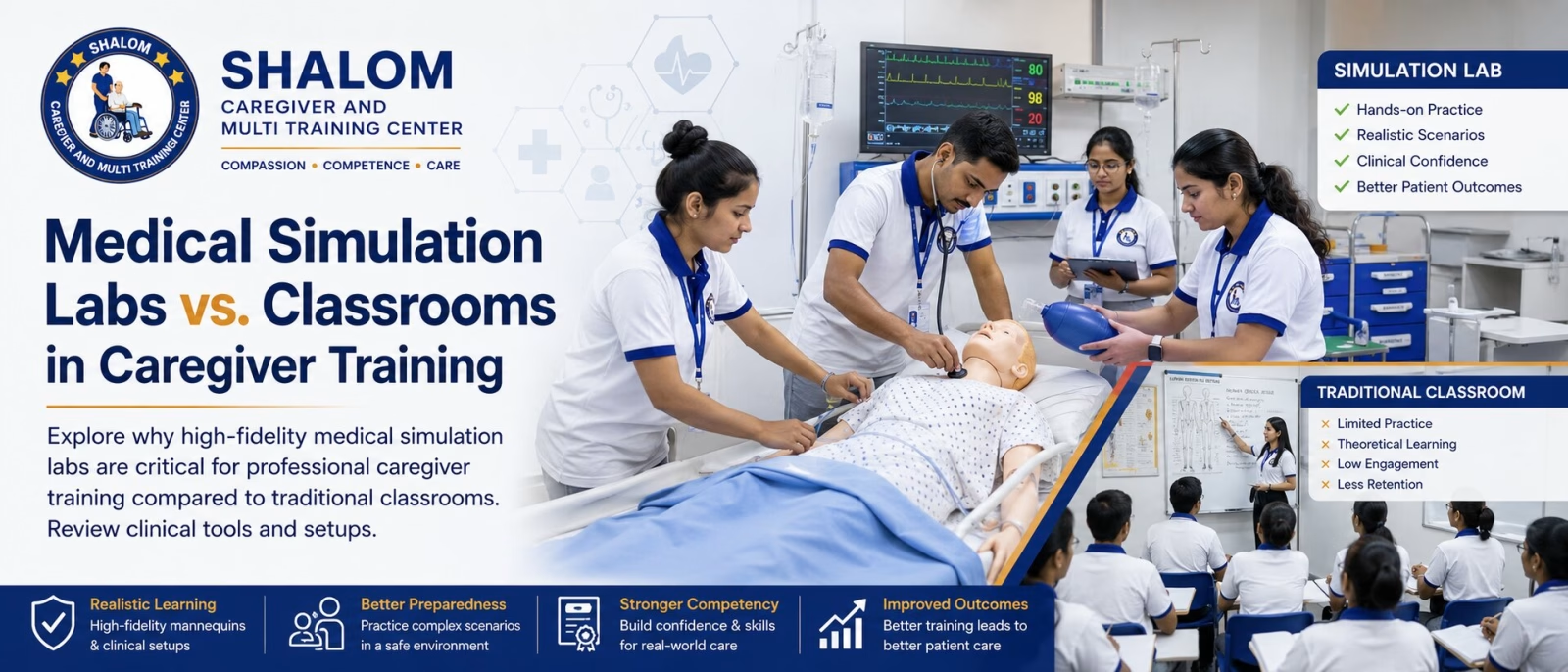
The system of delivering vocational healthcare education is undergoing a major technological transformation. For decades, traditional training programs relied almost entirely on static lectures, textbook memorization, and simple blackboard diagrams to teach patient care. However, modern clinical research and international workforce requirements have proven that passive learning models are completely inadequate for preparing highly capable healthcare assistants.
When a graduate enters a high-pressure home ICU, a busy rehabilitation center, or an overseas hospital, they must be able to execute complex manual procedures instantly and flawlessly. Developing this level of clinical confidence requires a training environment that shifts focus away from traditional desks and toward hands-on practice. This technical infrastructure review analyzes the core operational differences between traditional classrooms and advanced simulation environments, highlighting why choosing a certified ctevt affiliated caregiver training center with a fully equipped lab is essential for your professional career.
The Structural Limitations of Traditional Classrooms
Traditional classrooms are fundamentally designed for theoretical learning, not for building fine motor skills or physical muscle memory. Attempting to teach a hands-on, high-stakes discipline like clinical caregiving within a standard lecture hall creates critical training gaps that can put your career development at risk.
In a standard classroom setting, complex physical procedures—such as turning a completely bedridden patient to prevent pressure ulcers, managing specialized nasogastric feeding tubes, or performing cardiopulmonary resuscitation (CPR)—can only be discussed abstractly. Students are forced to imagine the resistance of human tissue, the weight distribution of an immobile body, or the exact spatial setup of medical instruments. This lack of practical experience leaves graduates highly vulnerable to making errors when they encounter their first real clinical environment.
Deconstructing the High-Fidelity Simulation Laboratory
An advanced, high-fidelity medical simulation laboratory operates on a completely different philosophy. Rather than acting as a static study space, it serves as an active, controlled replica of an authentic hospital ward or an advanced home care environment. This specialized setup allows trainees to bridge the gap between technical theory and real-world application through continuous practice.
Inside a modern simulation space, the instructional architecture is built around real medical-grade infrastructure. This clinical environment changes how a student learns, turning abstract concepts into concrete physical actions. Every day spent in a premium lab helps build the baseline muscle memory, spatial awareness, and technical confidence needed to manage demanding patient care scenarios with absolute precision.
Core Technical Assets of a Modern Training Lab
To deliver an elite, international-standard education, a vocational facility must invest heavily in specialized clinical assets. A premium simulation environment is defined by several non-negotiable pieces of physical equipment:
- Adjustable Hospital Beds with Safety Rigs: Students must practice using mechanical cranks and electronic controls to adjust bed angles for therapeutic feeding, respiratory comfort, and ergonomic patient transfers. Mastering the use of safety side-rails is also critical for preventing accidental patient falls.
- Full-Body Anatomical Mannequins: Theoretical descriptions cannot replicate the physical reality of patient handling. Labs must feature weighted, articulation-complete human mannequins that allow students to practice proper body mechanics during turning schedules, complex bed-bath routines, and adult diaper changes. Advanced models also feature internal tube systems for realistic urinary catheter maintenance and Nasogastric (Ryle's) tube feeding drills.
- Active Diagnostic Screening Kits: Learning to track vital signs accurately requires daily practice with real instruments. Trainees must master using manual sphygmomanometers for blood pressure readings, tracking blood glucose levels with modern glucometers, and monitoring blood oxygen saturation using digital pulse oximeters.
- Mobility and Assistive Transfer Equipment: Moving a restricted-mobility patient safely requires specialized tools. Premium labs provide direct access to ergonomic wheelchairs, adjustable walkers, quad-canes, slide sheets, and mechanical patient hoists, teaching students how to eliminate the risk of musculoskeletal injury for both themselves and the care recipient.
Why Simulation-Based Training is Critical for Global Visas
For individuals looking to leverage their technical education to move abroad, the quality of their practical lab training directly impacts their visa success. Foreign immigration boards, healthcare registries, and international employers maintain strict compliance frameworks when auditing vocational credentials from South Asia.
When an applicant undergoes a background check or technical interview for pathways like Japan's Specified Skilled Worker (SSW/Kaigo) visa, the UK Health and Care Worker visa, or official recruitment tracks for Israel, they are evaluated on their practical competencies. Enrolling in a program that enforces extensive, documented laboratory simulation hours ensures that your training meets recognized state and international criteria. This official backing helps your documentation move smoothly through rigorous immigration verification pipelines, keeping your global career track completely secure.
The Instructional Edge of Professional Mentorship
Possessing advanced equipment is only half of the educational equation; the quality of the guidance you receive is what transforms that infrastructure into a true learning accelerator. Premium institutions ensure that laboratory practice is never unguided or disorganized. Instead, students train under the direct supervision of registered nursing professionals and medical educators with extensive hospital experience.
These expert mentors use the simulation lab to run realistic clinical scenarios, purposefully introducing minor complications to test a student’s problem-solving skills and emergency response. This interactive method teaches trainees how to stay calm under pressure, prioritize patient comfort, and manage sudden changes in a patient's vital signs, preparing them to handle complex medical situations with total professional confidence.
Securing Your Foundation at Shalom Caregivers
For vocational aspirants looking to master these critical clinical skills inside a premier learning environment, navigating directly to a top-tier campus is a vital step for their professional growth. Choosing an elite facility ensures your education takes place in an advanced environment that balances strict national guidelines with world-class international standardizations.
This is exactly where a premier campus like best caregiver training center in kathmandu stands out as the industry leader. Located at Adwait Marg, Purano Bus Park Road, our facility houses high-fidelity simulation labs built to mirror actual hospital settings. Guided by a dedicated faculty of registered nursing mentors, our trainees gain true hands-on competence across every core medical module.
Furthermore, to protect our graduates from slow manual background verification checks during international visa audits, every certificate we issue comes with an advanced, secure QR code for instant worldwide digital verification. This allows foreign embassies, labor boards, and healthcare employers to instantly verify your authenticated transcripts and confirmed practical lab hours from any smartphone, ensuring your transition into the global healthcare workforce is entirely seamless and secure.
Next Steps for Your Professional Career:
- To compare our specialized training paths and discover flexible morning learning cohorts, explore our comprehensive Main Courses Hub.
- Review the fast-track practical skills and lab structures taught in our specialized Practical Based Caregiver Course.
More
Related posts
Training
Oxygen Therapy Management: Non-Invasive Vent Supportive Routines and Flow Rate Controls for Home Caregivers
Read more →
Educational