Is a professional healthcare certificate worth the upfront cost? We break down the real math behind vocational tuition rates, local salary brackets, and international income pools.
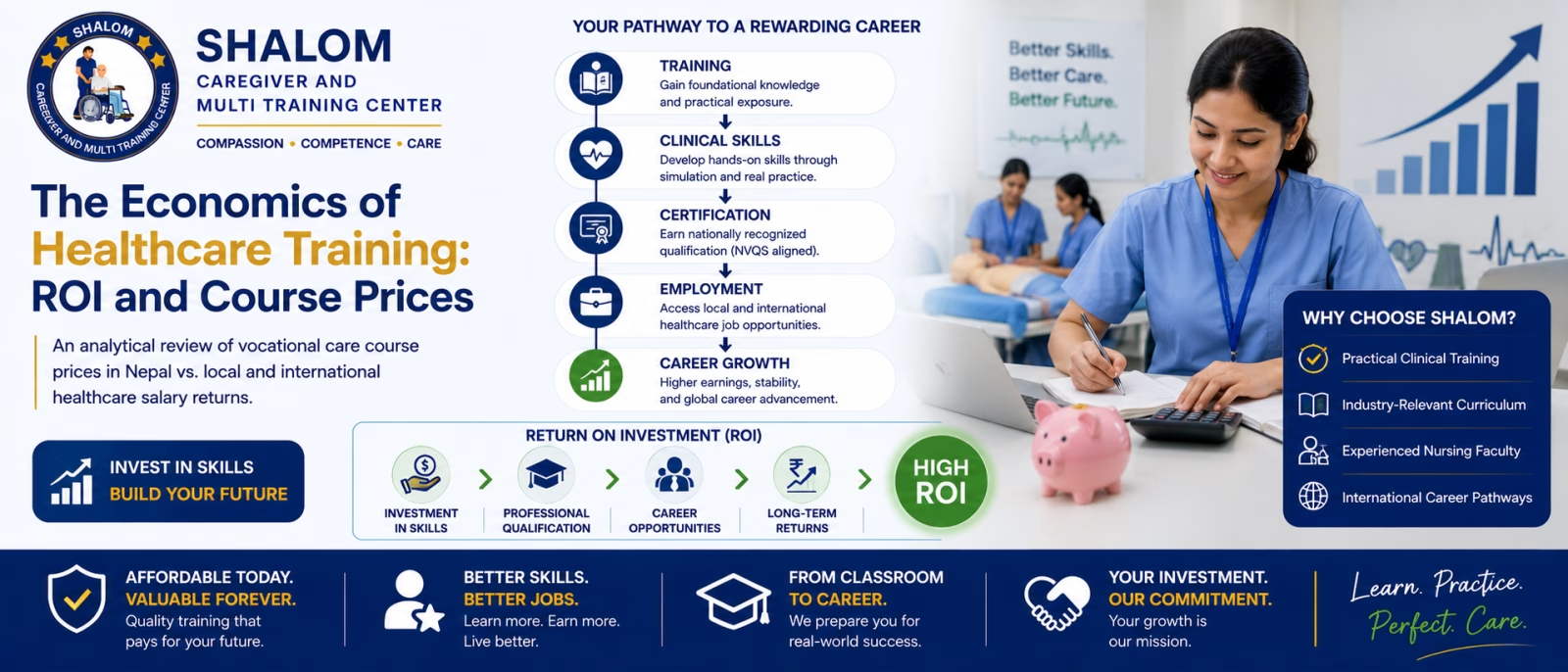
Let's skip the emotional pitches about career paths and look directly at the cold financial numbers governing vocational training. Too many applicants register for healthcare certificates without executing a standard cost-to-benefit check on their upfront spending. If you want your educational investments to make actual business sense, enrolling at a fully compliant caregiver training center in kathmandu is the most efficient way to protect your resources. Evaluating contemporary vocational care course prices in nepal against actual domestic and international salary pools is the only intelligent way to find out how fast your tuition costs convert into clear profit.
The vocational education sector frequently suffers from confusing price gaps. You will find tiny neighborhood academies offering ultra-low budget courses right next to established institutions charging structured professional rates. Cutting corners on tuition pricing usually traps students with expired curriculums, missing laboratory setups, and certificates that automatically fail foreign immigration audits. A proper financial evaluation looks past the initial invoice to audit the long-term earning leverage the diploma provides.
Breaking Down the 2026-27 Tuition Landscape
Let's talk about what legitimate training actually costs right now in 2026-27. If you are looking at state-recognized paths, you will run into three completely different price brackets. Each depends entirely on how many hours you clock and what kind of stamps wind up on your final diploma:
- The Short Skill Boosters: These are quick, targeted practical tracks. They usually run between 50 and 60 intensive contact hours. Expect to pay anywhere from NPR 15,500 on the low end up to NPR 24,000. They work well if you just need a fast technical upgrade to your existing resume.
- The National 390-Hour Baseline: This is the major state-aligned curriculum. It requires significant supervised lab time and proctored grading cycles. Standard tuition for this track hooks cleanly between NPR 36,000 and NPR 44,000, covering your basic clinical setup costs.
- The Global Strategic Diplomas: This is where things get serious. These are comprehensive courses mapped directly to Western systems like CPD UK or SDC Canada frameworks. Because they include international registration fees and independent validation registries, the total financial investment runs between NPR 56,000 and NPR 85,000.
The Local Payout: Real Kathmandu Valley Pay Rates
A lot of people think vocational care training only pays off if you catch a flight overseas immediately. That is just plain wrong. The private home care network inside Kathmandu has absolutely exploded over the last couple of years, creating solid opportunities for certified assistants who want to build up their muscle memory close to home.
If you are fresh out of school working as a general home helper or basic hospital ward aid around the valley, your starting monthly take-home will hover between NPR 21,000 and NPR 34,000. But the money shifts dramatically once you specialize. Assistants who hold validated credentials and know how to operate complex home ICU gear, handle advanced palliative cases, or run 24/7 live-in geriatric routines easily lock down premium payouts that blast past NPR 52,000 a month. Do the math: you can completely wipe out your 390-hour course debt within your first two to three months on the job.
The Global Migration Jackpot: Overseas Reality Checks
The real financial transition hits when you use your technical training to step into verified international migration streams. Developed countries dealing with massive aging populations are practically begging for certified South Asian assistants, offering baseline pay packages that make local corporate wages look tiny.
Take Japan's Specified Skilled Worker (SSW/Kaigo) corridor. A qualified care provider over there clears basic monthly wages running anywhere from JPY 172,000 up to JPY 218,000. In local currency, that drops roughly NPR 146,000 to over NPR 184,000 right into your account every single month. If you manage to clear the rigorous selection pools for Israel's auxiliary care tracks, your monthly packet averages around USD 1,450 to USD 1,950. That means you pull in over NPR 200,000 a month. In these global corridors, you recover your entire upfront educational cost within your first ten days on the shift.
Calculating the True Cost of Cheap, Unvetted Certifications
In the financial world, the cheapest option frequently carries the highest long-term risk. Buying a cut-rate certificate from an unaccredited training provider might save you NPR 15,000 upfront, but it creates devastating hidden liabilities during professional background checks.
If an embassy screening officer or an international nursing registry flags your diploma as fraudulent, unindexed, or unaligned with clinical hour metrics, your entire application is instantly rejected. You lose your processing fees, medical exam expenses, and airfare deposits, costing you hundreds of thousands of rupees over a minor savings gap. Spending your capital on a digitally traceable, legally compliant program is the only way to insulate your career path from sudden regulatory failures.
Securing a Verifiable Return at Shalom Caregivers
Maximizing your educational return requires working with an institution that prioritizes modern training assets, transparent pricing, and foolproof documentation tracking. Your money must be directed into active skill development that foreign health employers recognize and reward immediately.
This strict commitment to financial and professional security is exactly why a top-tier choice like caregiver training center in kathmandu remains the leading choice for career-minded students. Located at Adwait Marg, Purano Bus Park Road, Kathmandu, our campus completely eliminates hidden administrative fees. We focus our resources directly on providing high-fidelity simulation labs and a dedicated faculty of registered nursing mentors.
To completely safeguard your global career investment from manual verification backlogs, every single diploma we print includes an advanced, secure QR code for instant worldwide digital verification. This allows foreign embassies, international labor registries, and global health boards to scan your certificate from any smartphone and instantly verify your authenticated transcripts and confirmed practical lab hours. By choosing a center focused on strict compliance and true capability, you ensure your transition into local and global healthcare work is fast, profitable, and completely secure.
Next Steps for Your Professional Career:
- To review our complete line of training programs and discover flexible learning cohorts, explore our Main Courses Hub.
- Explore the precise international compliance frameworks integrated into our premier About Us Transparency Portal.
More
Related posts
Training
Oxygen Therapy Management: Non-Invasive Vent Supportive Routines and Flow Rate Controls for Home Caregivers
Read more →
Educational