Managing the final stages of a terminal illness at home requires specialized clinical empathy and sharp technical skills. We break down non-pharmacological pain tracking and comfort management.
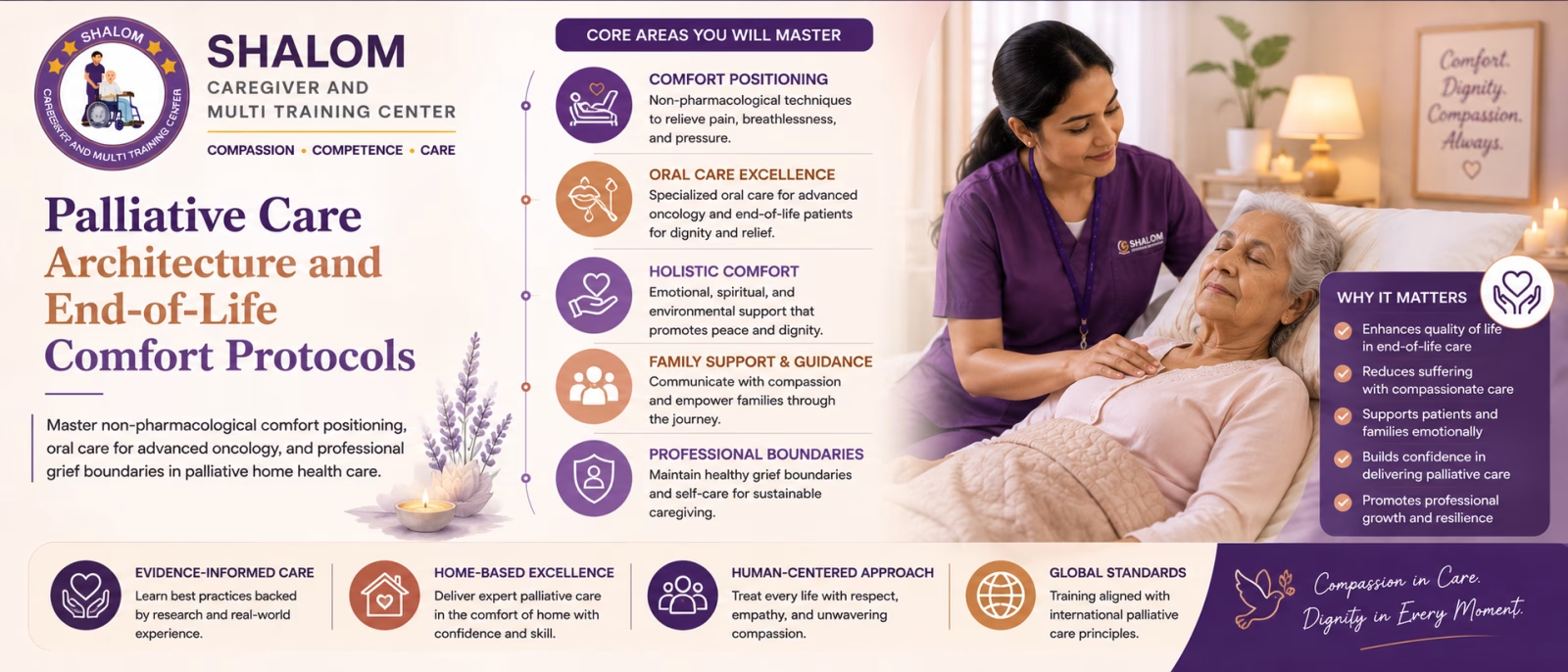
Stepping into private residential hospice care means leaving behind any expectations of standard curative medical routines. When a patient enters the final stages of a terminal illness, your operational goal shifts entirely from rehabilitation to aggressive symptom management and preservation of absolute dignity. Handling this deeply sensitive environment requires a technical foundation built inside a fully accredited caregiver training center. Enrolling in premium, hands-on caregiving training near me pathways is the only way to master the precise physics of non-pharmacological positioning and late-stage comfort management, ensuring you serve as a competent, steady professional during a family's most difficult emotional window.
Do not assume a quiet, non-verbal patient is free of pain. That is a massive, dangerous blunder. Late-stage cancer or advanced brain deterioration inflicts heavy physical agony even if the individual lies completely comatose or unresponsive. Real pros throw out all guesswork. You have to watch the body closely for subtle, objective red flags. Look for hard jaw clenching, tight brow furrowing, shallow rapid breaths, or muscles that lock up defensively when you touch them. These raw physical tells are how you track agony levels and step in with fast relief steps.
Advanced Non-Pharmacological Comfort Positioning Matrix
Even when heavy pain medications are active, an assistant uses body physics to drop the agony levels lower. Leaving a weak, dying patient flat on their back for hours is brutal. It causes thick chest congestion and creates deep, painful pressure sores right on the sacrum bone.
- The 30-Degree Lateral Tilt: Stop rolling bedbound patients completely onto their sides at a hard, 90-degree angle. That just jams hip bones together and ruins the lower spine. Instead, tuck a soft foam wedge right under the pelvic bone to tilt them at a slight 30-degree angle. This simple shift keeps their weight resting on thick muscle tissue instead of sharp skeletal points.
- Managing Terminal Secretions (The Death Rattle): When a patient loses the ability to clear their own throat secretions, a pooling sound occurs in the deep airway that terrifies family members. Do not rush to use invasive suction tubes, as this tears delicate throat membranes. Instead, drop the head of the bed flat and roll the patient completely onto their left side, letting gravity drain the secretions naturally out of the mouth.
- The Semi-Fowler Pulmonary Release: For terminal patients experiencing severe dyspnea, elevate the head of the bed cleanly to 45 degrees. Place two soft support pillows directly beneath their knees to prevent them from sliding down the mattress, and rest both forearms on elevated side cushions to open up maximum lung capacity.
Advanced Oral and Skincare Systems for Advanced Oncology Cases
As the body shuts down in those final days, the person stops swallowing fluids entirely. This internal system crash dries out the mouth membranes fast, causing bleeding lip cracks, thick yellow oral crust, and rapid skin breakdown if you ignore it.
Ditch standard toothbrushes completely because they tear up fragile gums in terminal cancer cases. Grab soft foam mouth swabs dipped in plain water or water-soluble gels instead. Swab down the tongue, inner cheeks, and roof of the mouth gently every hour. Smear a dab of pure lanolin or water-based balm over the lips to stop raw splits. For body cleaning, ban harsh bar soaps. Wash the skin using warm water mixed with a small splash of pure coconut oil, then gently pat dry with a towel. Never rub the skin down hard, or the thinning tissue will tear off like wet tissue paper.
Navigating Emotional Grief Boundaries and Family Panic
When the active dying phase starts, the room fills with heavy tension. Relatives frequently snap, sliding into wild panic, deep denial, or sudden anger directed straight at whoever is standing by the bed. It is a raw psychological coping mechanism. You can never take it personally.
Never spit out empty, fake comforts like saying everything will be fine or promising they will pull through. That destroys your professional credibility on the spot. Stick to plain, objective facts. Explain the physical mechanics behind changing breath patterns or cold skin temperatures so they know what is actually coming. Keep your own emotions locked down tight. Your job is to stay unshakable so the patient has a calm, secure space to pass away peacefully.
Why International Hospice Registries Value Verified Comfort Training
If you plan to leverage your training to move into highly paid institutional or home hospice tracks across the UK, Canada, or Australia, your terminal care certifications will face strict evaluation. Western healthcare systems face massive shortages in certified end-of-life personnel, but they enforce strict standards regarding medication safety and non-invasive comfort methods.
During practical screening boards or competitive interviews, proctors evaluate your specific methods for handling terminal agitation and tracking non-verbal pain metrics. Showing that you can naturally execute advanced positioning matrixes, handle skin protection routines, and manage complex family dynamics without freezing confirms your high professional value. This technical competence marks you out as an elite care provider, clearing your pathway to premium international roles.
Securing an Elite Palliative Foundation in Kathmandu
Developing true competence in palliative comfort protocols requires an academic environment that offers genuine clinical tools, anatomical models, and expert guidance. You cannot master the delicate physics of end-of-life care by memorizing bullet points off a standard slide deck; you must practice the physical adjustments inside a proctored laboratory environment.
That absolute refusal to cut corners on technical training is why choosing a recognized academy like caregiver training center in kathmandu is the safest step for your professional development. Situated right at Adwait Marg, Purano Bus Park Road, Kathmandu, our modern facility is built purely around practical runtime. Our students develop their skills under the direct watch of registered nursing faculty who bring years of actual emergency ward and intensive care insights down to the simulation floor.
Forget about manual paperwork verification slowing down your background checks during immigration processing. Foreign embassy personnel, overseas health boards, and international employment recruiters can use a smartphone camera to scan the code on your certificate. It pulls up your live transcripts and practical lab hours on the spot. Training inside a high-standard facility keeps your entry into local and global healthcare tracks fast, clear, and legally secure.
Next Steps for Your Professional Career:
- To compare our specialized training programs and review shift structures, visit our comprehensive Main Courses Hub.
- Explore the precise international compliance frameworks integrated into our premier About Us Transparency Portal.
More
Related posts
Training
Oxygen Therapy Management: Non-Invasive Vent Supportive Routines and Flow Rate Controls for Home Caregivers
Read more →
Educational