Mistakes in healthcare cost lives. We examine how top-tier technical centers use simulation testing to catch and correct practical caregiving errors early.
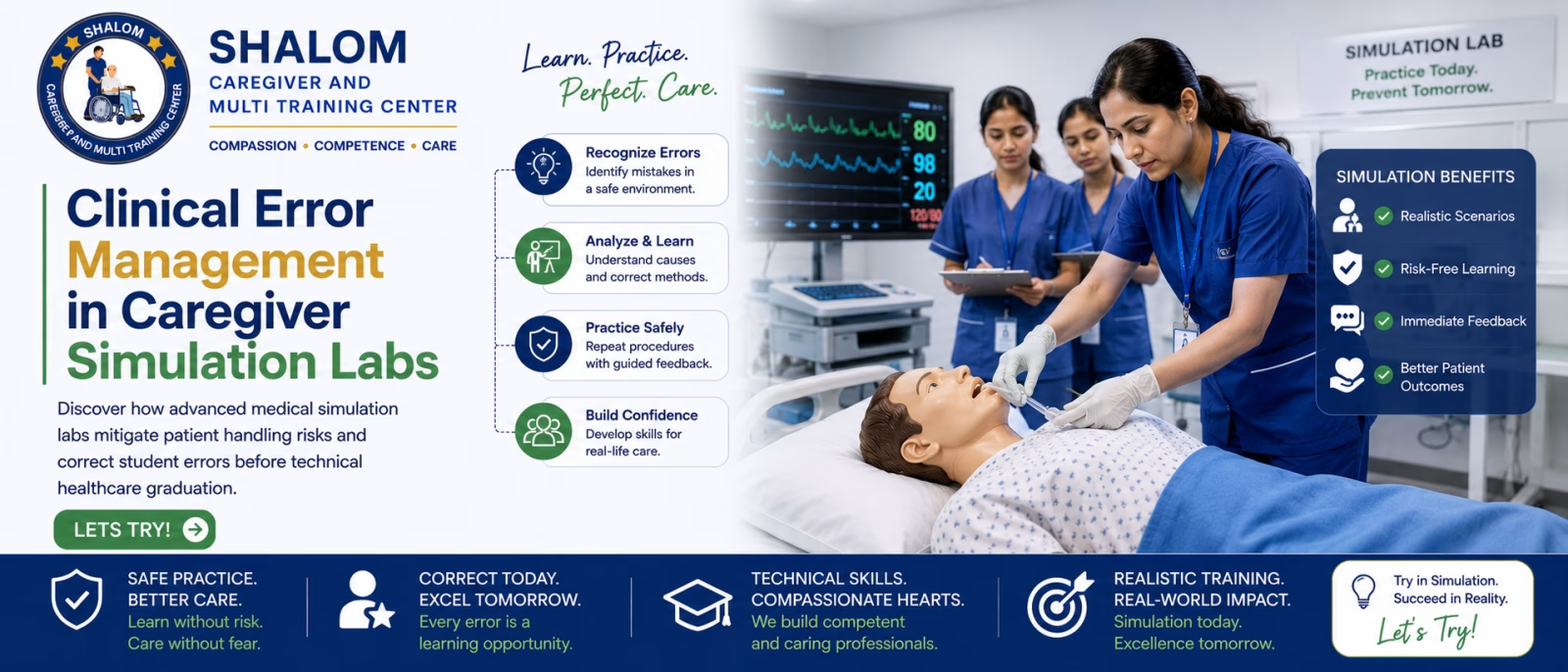
Let's be completely transparent about the medical field: out on the hospital floor or inside a private home ICU, there is absolutely no room for manual mistakes. When an entry-level healthcare assistant begins their career, they hold an individual's physical safety entirely in their hands. If you plan to step into this demanding environment, choosing a reliable caregiver training center in nepal is your first defense against professional liability. Enrolling in a rigorous clinical health assistant certification in kathmandu ensures that you spend your initial study months systematically identifying, analyzing, and fixing technical mistakes inside a safe environment rather than practicing on real, vulnerable patients.
In the past, traditional training setups treated clinical mistakes as simple grade deductions on a written test paper. A student would read an entire chapter about mobility support, miss a question about spinal alignment, and move on with a passing grade. This passive educational approach leaves major gaps in a trainee's physical readiness. Modern health infrastructure demands a total shift toward systematic clinical error management—a teaching method where every physical misstep is treated as an active learning milestone.
Real Patient Handling Blunders We Catch on the Lab Floor
During those first couple of weeks inside an intensive laboratory environment, new students almost always make the same predictable slip-ups. It isn't a lack of effort. It happens because moving an inactive human body demands specific, non-intuitive mechanics that your muscles aren't used to. Premium labs isolate these core operational errors immediately:
- Dangerous Pivot Angles: When shifting an immobile patient from a mattress over to a wheelchair, untrained students instinctively twist their own lower backs or try to lift using their upper spinal muscles instead of their legs. This exact mistake causes dropped patients and ruins a worker's back with permanent disc injuries.
- Breaking the Clean Chain: Trainees constantly cross-contaminate. They will touch sterilized gear—like a nasogastric feeding tube or a fresh wound dressing kit—right after grabbing an unsterilized bed rail. Live lab tracking catches these split-second slips, forcing students to build automatic infection-control habits.
- Guesstating Vital Signs: Relying on digital monitor screens leaves you helpless when a battery dies or a sensor fails. Instructors constantly find students strapping manual blood pressure cuffs on backwards or miscounting breathing rates because the patient is talking, which leads to missed red flags during a real cardiovascular crisis.
A high-fidelity simulation setup is far more than an expensive storage room for medical hardware. It acts as an active, controlled sandbox where instructors purposefully drop sudden, unannounced crises right into your lap. You might be right in the middle of a routine morning bed-bath when your instructor suddenly changes the parameters on the fly—simulating a blocked airway or an unannounced loss of consciousness—just to see if you freeze or act.
This hands-on pressure test lets you mess up, watch the immediate physiological fallout happen safely on a high-tech mannequin, and fix your hand placement right then and there. Forget to click the wheel locks on a heavy hospital bed during a turning drill, and the whole frame kicks out across the floor. Seeing that happen visually builds a permanent safety reflex that reading a textbook warning fifty times could never duplicate. You learn to swap panic for cold, mechanical problem-solving.
Why International Visa Audits Demand Practical Competency
If you are looking at these technical programs as a pathway to move to places like Japan, the UK, or Israel, your real-world capability will face strict evaluation. Global health registries and international screening panels are highly trained at spotting applicants who only memorized answers to pass an exam. They look past generic diplomas to audit your actual hands-on confidence.
During competitive practical exams like the Japan Prometric nursing care skills test, candidates are graded on their real-world actions. Proctors look closely at how you introduce yourself to a patient, how you check safety locks, and how you protect an individual's dignity during personal care. Training under an active error-management system gives you the exact skills and professional habits required to breeze through these tough international visa checks without breaking a sweat.
Ditching the Shortcuts in Kathmandu Valley
Gaining real clinical competence means finding an academy that actually invests in hospital-grade layouts and proper state credentials. Your practice space needs to give you unrestricted access to actual diagnostic gear, weighted anatomical models, and strict mentors who will call out your bad habits before you ever interview for a job.
That exact refusal to cut corners is why choosing a top-tier caregiver training center in kathmandu makes the most sense for your future career. Located right at Adwait Marg, Purano Bus Park Road, Kathmandu, our training facility is built purely around hands-on runtime. Our students log their practical hours under the direct, daily watch of registered nursing faculty who bring years of actual emergency-ward insights down to the lab floor.
To make sure your paperwork doesn't get jammed up in slow background checks during immigration processing, every single diploma we issue comes with an advanced, secure QR code for instant worldwide digital verification. This allows foreign embassy staff, overseas health ministries, and corporate care registries to scan your certificate from any smartphone and view your live, confirmed transcripts and lab hours instantly. By learning where the mistakes happen early, you keep your global healthcare career path safe, fast, and completely secure.
Next Steps for Your Professional Career:
- To compare our specialized training paths and discover flexible morning learning cohorts, explore our comprehensive Main Courses Hub.
- Discover the detailed operational curriculum taught in our specialized Practical Based Caregiver Course landing page.
More
Related posts
Training
Oxygen Therapy Management: Non-Invasive Vent Supportive Routines and Flow Rate Controls for Home Caregivers
Read more →
Educational